

Ginga Mundo Oakland
Hosted by Mestre Chipa & Ginga Mundo Oakland students, our event features capoeira workshops & rodas led by Ginga Mundo Founder Mestre Sabiá & invited guests. We will have our batizado & troca de cordas event to initiate new students and promote continuing students.
Annual Batizado & Troca de Cordas
Festa 2026!
»Schedule
-
Location: Axé Oakland (3700 E 12th St)
• 6:30p-9:00p | Open Roda (M. Sabiá & M. Toni Vargas) -
Location: Juntos
(3357 International Blvd)
• 5:30p - 7:00p | Kids Music Workshop, Movement & Roda (M. Toni Vargas)
• 7:00p - 9:00p | Adults Music Workshop, Movement & Roda (M. Toni Vargas)
-
Location: Juntos
(3357 International Blvd)
• 9:00a-11:00a | Kids Workshops (M. Sabiá & M. Sarará)• 11:00a-12:30p | Kids Batizado
• 12:30p-1:30p | Lunch
–Break (30m)–
• 2:00p - 4:00p | Adults Workshops (M. Sabiá & M. Sarará)
• 4:00p - 5:00p | Open Roda
» 8:00p - 11:59p | After-party @ Axé 3700 E 12th St
-
Location: Juntos
(3357 International Blvd)
• 10:00a - 12:00p | Aulão (M. Toni Vargas, M. Sabiá)• 12:00p - 12:30p | Lunch
• 12:30p - 1:30p | Bate Papo (Discussion) com M. Toni Vargas
• 1:30p - 3:00p | Adults Batizado & Closing Roda
»Fees
» GM Adults
Full Event: $250 | Batizado Only: $175 (email for $175 rate)
» GM Kids
Full Event: $200 | Batizado Only: $125 (Code: FESTA125)
» Guest Participants
Full Event: $175 | Day Pass: $100 | Workshop: $50 | Batizado: $25
» Families + Friends/Non-participants)
No tickets required!
»Attire
» Ginga Mundo Students: Capoeira uniform required.
» Capoeirista Guests: Capoeira uniforms/white clothes.
» Non-capoeirista Guests: No attire requirements.
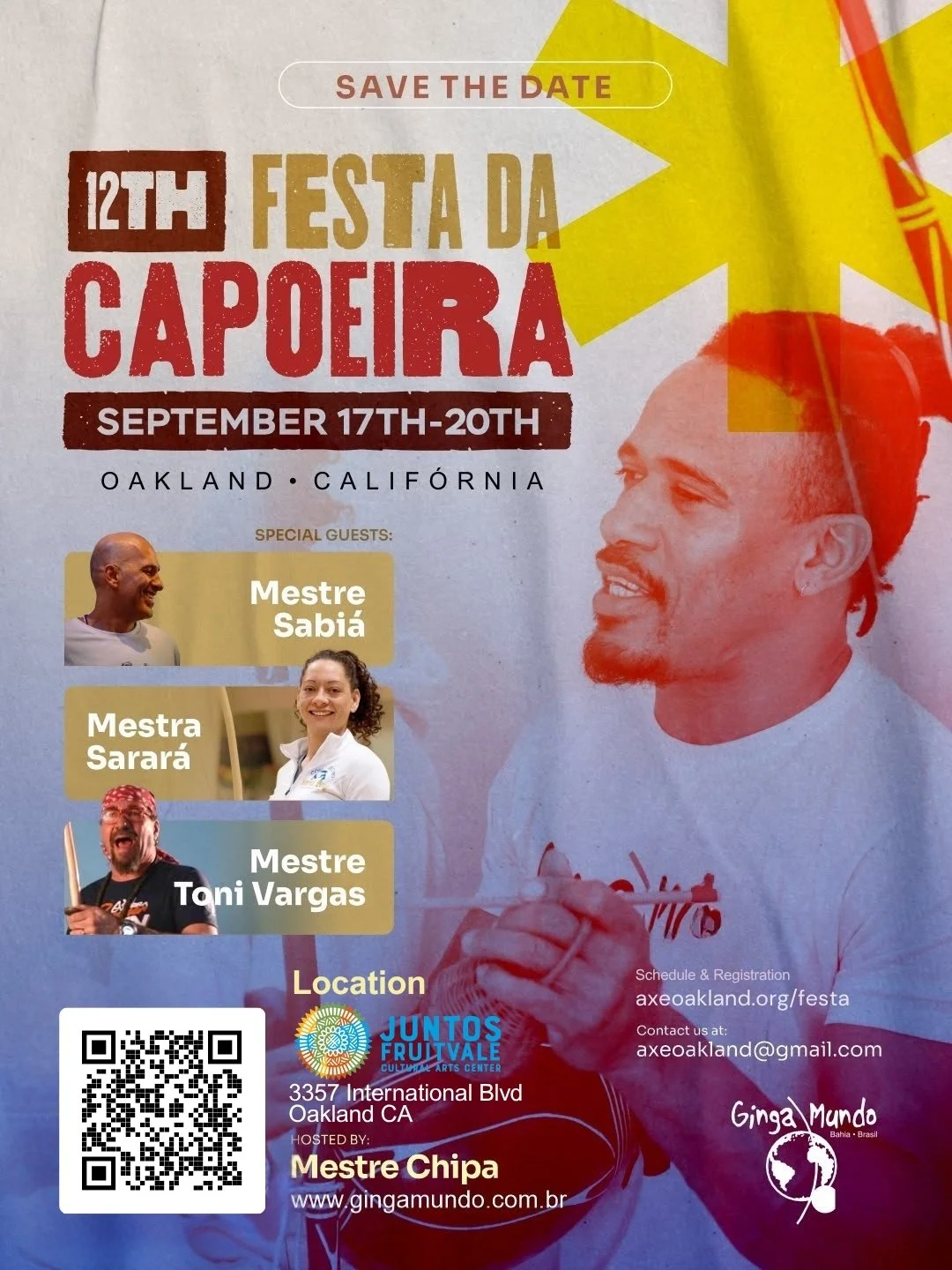
Learn About Our Special Guests!
MESTRE
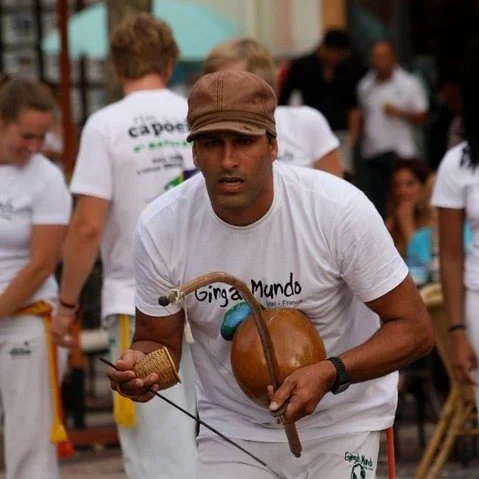
SABIÁ
MESTRA
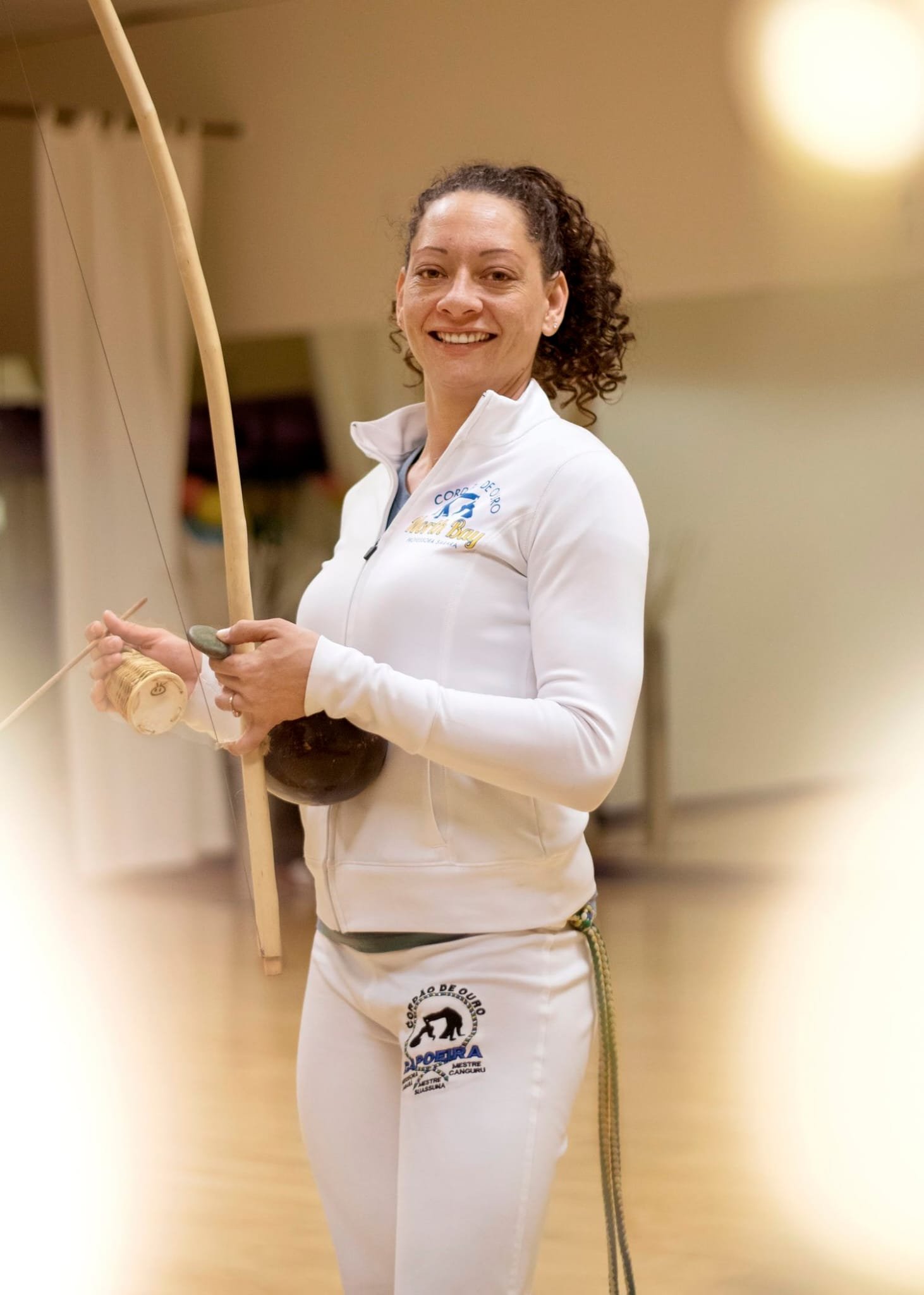
SARARÁ
MESTRE TONI
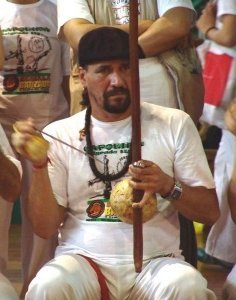
VARGAS
-
Mestre Sabiá (Jair Oliveira de Faria Junior) is a key figure in the world of Capoeira. He began his journey in the art in 1985 and started teaching in 1989. Mestre Sabiá is recognized for his work with children and is a pioneer in teaching Capoeira in Europe, particularly in Hamburg, Germany, where he worked with children in 1990, becoming a reference for Capoeira education for the younger generation.
In 2004, he founded the Ginga Mundo Association as part of the ONG Mandinga, which has been dedicated to promoting Capoeira and Afro-Brazilian culture through social and educational programs. He is the coordinator of the Capoeira Ginga Mundo Association, which has a global presence, promoting human rights, ethics, and socialization through Capoeira in schools and social programs. The Ginga Mundo project also hosts international events and has fostered Capoeira’s development worldwide.
Mestre Sabiá has been instrumental in organizing key events such as the “Ginga Mundo” International Capoeira and Afro-cultural Encounters and the Vadeia Mundo Vadeia World League, bringing together Capoeiristas from all over the world. His commitment to Capoeira extends beyond teaching; he has been a central figure in promoting Capoeira at international events, including the “Art’s Alive” festival in South Africa, the “Chungju World Martial Arts Festival” in South Korea, and many more across Europe, the Americas, and Africa.
In addition to his global work, Mestre Sabiá has dedicated much of his life to the preservation and development of Capoeira in Brazil. He teaches at private schools in Salvador, Bahia, and offers Capoeira classes to low-income youth in underserved communities, teaching the art in a way that emphasizes its cultural roots and philosophical principles. His contributions to the art form have been recognized globally, and he continues to influence Capoeira’s growth as both a martial art and a cultural movement.
In 2001, Mestre Sabiá had the privilege of having his work archived by the Guggenheim Museum, a testament to his impact on the cultural and artistic landscape. His work is not only that of a teacher and Capoeirista but also that of a cultural ambassador, connecting Brazil with the African diaspora through his travels and research on regional martial arts.
-
Mestra Sarará began her capoeira training over 25 years ago with Mestre Canguru, from Brazil. She was the founder/director of the Humboldt Capoeira Academy in Arcata, CA. The capoeira academy, with over 100 students of all ages was successful in positively influencing the community for eight years.
Mestra Sarará now lives in Santa Rosa, CA and continues her efforts to spread cultural awareness through the arts. She is often sought out to teach at capoeira events across the US and abroad. She is one of the highest ranked female capoeiristas in the US. Sarará has proven to be a role model for women athletes, and has come to exemplify the core concepts taught through capoeira.
-
Antonio César de Vargas (born 5 April 1958), better known as Mestre Toni Vargas[1], is a renowned Brazilian capoeira mestre, composer, poet, educator, and one of the most recognized cultural figures in modern capoeira. He is affiliated with the Grupo Senzala and co-founder of Ilê de Seu Peixinho in Rio de Janeiro.
Toni Vargas began training capoeira in 1968 at the age of 10, introduced by his cousin to Mestre Rony of the Grupo Palmares de Capoeira, in the north zone of Rio de Janeiro. Coming from a modest background, he could not afford classes, but Mestre Rony welcomed him regardless, starting his path in capoeira. After some years, he continued his training with Mestre Touro of the Grupo Corda Bamba in the suburb of Penha, receiving his blue cord[2].
In 1977, Toni joined the Grupo Senzala to train under Mestre Peixinho, one of the group’s most influential leaders. He received his red cord in 1985 and became the first student to be officially formed by Mestre Peixinho. Though his exact recognition as a mestre came later, it was through the broader acknowledgment of the capoeira community.
Toni Vargas graduated in Physical Education from the Federal University of Rio de Janeiro (UFRJ) and holds a postgraduate degree in dance. He is especially known for his musical contributions and poetic expression in capoeira, having participated in numerous recordings and released several albums. In 2000, he was honored by the Superliga Brasileira de Capoeira as one of the century's greatest mestres[3].
As a teacher and performer, Toni Vargas has led capoeira workshops, lectures, and events across Brazil and abroad, including frequent travels to Europe, particularly Denmark. He runs his own school within Grupo Senzala and is one of the founders of the Centro Cultural Senzala de Capoeira Memória Viva Mestre Peixinho.
For over 35 years, Mestre Toni has worked with children through capoeira and his own educational method called Recreação Ativa, which combines music, movement, and storytelling. He released a children's CD under the same name to support educators.
In 2017, he published his first book, Fragmentos da Mandinga, later adapted into a music and poetry show of the same name. As of today, he has recorded six albums. His albums include Liberdade, Saudade, Os Fundamentos da Malícia (with Nestor Capoeira), and Quadras e Corridos. Including iconic songs such as "Quando Venho de Luanda", "Dona Isabel", "Saudade", and "Era Uma Noite Sem Lua"[4].
Mestre Toni is married to a capoeirista and has three sons who also practice capoeira (one among them is Ruan Vargas). He openly criticizes the marginalization and religious discrimination that capoeira has historically faced, and advocates for preserving its Afro-Brazilian roots. In his own words, "Capoeira is my life and everything that I am. It makes me a subject of my time and my history".
In interviews, Mestre Toni has openly criticized the popularized 1990s notion of the “complete capoeirista” — someone who can play, sing, and play instruments. He sees this concept as flawed, noting that “any capoeirista who thinks they are complete is not well.” For him, true mastery lies in the constant pursuit of knowledge and deeper understanding of capoeira’s foundations[5].
Mestre Toni also opposes the idea of capoeira becoming an Olympic sport. As an educator, he prioritizes the human and cultural aspects of the art over athletic performance. He believes that the Olympic model places performance above humanity and would rather see capoeira thrive through its cultural, artistic, and community-driven paths.
When asked about the divide between Capoeira Angola and Capoeira Regional, Mestre Toni notes that this distinction is mostly a “Salvador division” rooted in the historical origins of both styles. Being from Rio de Janeiro, he chooses not to take sides. Instead, he sees capoeira as a unified “cosmic family” and works to promote an inclusive understanding of the art.